


If you want to learn more about Black History, you should read more Black historical fiction. And while I could add fifty caveats to that statement, I will resist and simply explain why, offering some recommendations.
But first, let me explain what the discipline of history is, as that underpins my reasoning.
What is History?
As a historian, I find that people either love or hate history. Every time I introduce myself and tell people what I do, I get one of two reactions:
“Oh wow, I’ve never met anyone who actually does that… I hated history in school. So boring!” Then they tend to tell me their memories of a mean or boring teacher who simply made them learn facts and dates.
Or,
“Oh wow, I LOVE history! I’m a bit of a history buff myself.” Then, these folks happily rattle off facts and figures, and (if I’m lucky) test my knowledge of facts and figures (the “if I’m lucky” was definitely sarcasm).
These reactions are funny mirror images of one another, as they’re both quite wrong about what history is. History is not about facts and dates you can rattle off at a trivia night. History is the examination of the past like it is an intricate machine that explains itself when you dismantle and look at it closely. We identify and examine interdependencies, continuity and change, asking questions that ultimately try to help us understand what was important and why. Another way to understand the discipline of history is to think of it as we do literature, only our books, poems, and plays are primary sources, and the past. But we similarly piece together the story of the past, analyze the meaning of that story, considering the way things unfolded, and the actors who pushed along the plot. And though we all read for different reasons, writers of both nonfiction and fiction alike are fundamentally examining people. I can speak for myself at least: I enjoy history as an opportunity to understand human behaviors in different circumstances, witnessing the willful dynamism of the human spirit.
Understanding the discipline of history is important for you, dear reader, because that knowledge opens the door to a much richer experience of the subject than mere fact-finding missions in dense, boring, non-fiction books. Instead, you can consider yourself an excavator of the past, someone learning old stories, meeting people with stories to tell and parts to play in larger stories. And you see this in historians ourselves (if you have the pleasure of knowing one). You can see it in the curiosity of one who just found a primary source, telling of an unexpected person doing an unexpected thing in an unexpected context, bringing a plot twist into the story they thought they knew. Or a the joy of finding a pattern among your primary sources that reveals something more significant than you initially expected. Our job is to make a two-dimensional story three-dimensional by finding intricacies and nuances that others have missed or overlooked. This is a central reason the pathways forged by W.E.B DuBois, Carter G. Woodson, and countless others in the field of history are so important. Black history fundamentally changes the broader narrative of American history, forcing it to be a fuller and truer version of the nation’s story.
Even so, no matter how much I love history, writing history, and reading historical nonfiction, I am aware of the limitations of our field. And I am aware that nonfiction is not for everyone.
But history is for everyone! And Black history must be accessible to everyone. So, if you don’t enjoy nonfiction, I would like to permit you to learn more by reading Black historical fiction instead.
Why Black Historical Fiction is Important
As we discussed last week, the heartbeat of Black history is storytelling. The very existence of the field is a result of generations of African descended people in America choosing to continuously tell their stories despite the silencing efforts of white supremacy. In doing so, they simultaneously created and preserved cultures, whilst also preserving otherwise untold histories. And despite the incredible work done by historians, we are not always able to repair the damage done to Black histories by “the violence of the archive.” Coined by French philosopher Jacques Derrida, historian Marissa J. Fuentes uses this term in her iconic work Disposessed Lives: Enslaved Women, Violence, and the Archive (2016) and defines it as the way that white supremacy constrained the lives of enslaved people at the time continues to constrain the stories that can be told about them today, by shaping what enters the archive. She viscerally describes the act of conducting historical research on enslaved women as “dwelling on the fragmentary, disfigured bodies of enslaved women,” as rendered by the archive in which they only appear as fragments in other people’s stories.
But history is an empirical subject, dependent upon archival sources, which can (and somewhat has) limited what we can do to fully excavate the history of Black life in America and the diaspora. For example, while we have tens, if not hundreds, of diaries kept by white, wealthy women in the 17th through 18th centuries, we have very few by wealthy Black women, and almost none from enslaved women. We are trapped looking at Black people from an outsider’s vantage point, making the interiority of Black lives somewhat inaccessible. Some historians have attempted this through what we call “speculative histories,” where authors like Sadiyah Hartmaan fill in the gaps using cultural knowledge. In truth, few historians are willing to accept this approach as disciplinary orthodoxy.
Yet the stories are there. Deep in the family lore that grandparents share with their descendants while sitting on porches, the stories shared over family reunions about a great uncle and a side of the family that you don’t know directly, but you know where they are and what they do. I even find it in the protection I’ve received as an outsider arriving without parents to teach me how to navigate white supremacy. There is a cultural knowing that comes from these embedded and embodied histories, carried in the hearts and souls of Black folks.
It is often from here that writers of Black historical fiction write. Dealing in fiction frees authors from the constraints we historians face, allowing them to write from a place of knowing that does not have to be reflected entirely in the archive. This is not to suggest that authors of historical fiction are free to lie to you, but rather that they can take steps of authorial faith to explore the interiority of people rendered silent in the archive, based on broader source bases than the archive offers. Still, good historical fiction is situated in archival research, allowing authors to more accurately construct the historical setting. Simultaneously, they are free to animate the fragmented stories of enslaved people with emotion, feeling, and meaning that go beyond the conclusions historians may know, but are rarely allowed to assert.
Black historical fiction is important because it testifies to the full-personhood of historically marginalised people. The genre amplifies the lives and circumstances that are often pushed aside or seen two-dimensionally. I believe it does what many nonfiction books struggle to: brings us closer to those who can often feel so removed. To read about the experience of enslavement through historical fiction removes the distance and space nonfiction can dwell in, and immerses you in the past, inviting you to see yourself in the characters, and them in you.
I could go on, but I will keep it simple this week. Let me close by sharing my 5 of my favourite Black American historical fiction books and why you should read them.
5 Black Historical Fiction Books I Love
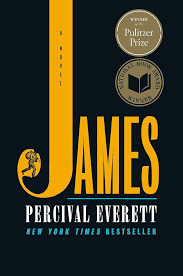
James by Percival Everett
James is possibly my favourite historical fiction book EVER. It is a reimagining of Huckleberry Finn from the perspective of the enslaved man “Jim.” In it we follow the journey of Jim as he navigates the perils of being a fugitive slave with a white boy in tow, all while exploring his heart and mind. This is a fantastic book to learn about the experiences and world of enslaved people. It shows us the complexity of decision-making and the heart of James, reminding us of the humanity of the enslaved. If you read it, you will learn all about the fugitive slave law, the fragility and dangers of Black mobility in the antebellum south, Black networks of communication and community, and Black family life.
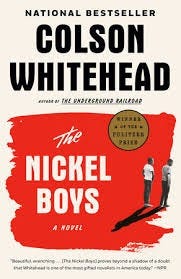
The Nickel Boys by Colson Whitehead
The Nickel Boys by Coleson Whitehead is not an easy read but it is a necessary one. Based on real-life abuses at the Dozier School for Boys in Florida (a reformatory), The Nickel Boys follows the wrongful capture of the straight-laced college-bound Black teen, Elwood Curtis, sentenced to time at the reform school. Trigger-warnings are required for this one as it truly is a harrowing exploration of the vulnerabilities of Black boys in the Jim Crow South, and the invisible hand of white supremacy and how it derails lives, even of children. Set in the 1960s, it reveals the status quo of injustice that the Civil Rights Movement sought to illuminate and eradicate.
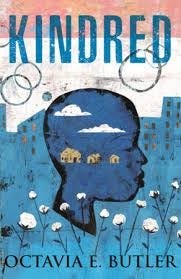
Kindred by Octavia Butler
Kindred by Octavia Butler is a MUST READ book for those seeking to understand the slave system of the antebellum era, despite being a blend of historical fiction and science fiction. The protagonist Dana lives in 1970s California with her white husband Kevin, yet keeps getting pulled back in time to the plantation her ancestors lived on in the antebellum South. Any more details spoils the narrative so I won’t say more. But I will tell you this is a fantastic exploration of the decision-making of enslaved people, the vulnerabilities faced by women on plantations, and will challenge you to think about the enslaved as people facing challenges we could not begin to evaluate in our modern mindsets.
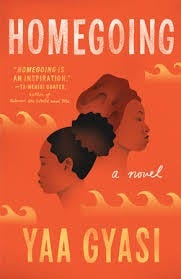
Homegoing by Yaa Gyasi
Homegoing is a generational historical saga that traces the divergent lineages of sisters Effia and Esi, born in 18th century Ghana, separated by the Transatlantic Slave Trade. Traversing 300 years of history, Homegoing is a necessary elucidation of the interpersonal and generational impact of colonialism, American slavery, and segregation. I am currently reading this with my book club, and I can say that it is a hard read, but it does the necessary work of illuminating the complex interconnections between the African diaspora and Africans, as well as showing the havoc wreaked by white supremacy upon generations, families, and nations.
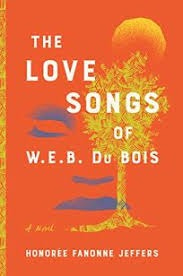
Love Songs of W.E.B. Du Bois by Honoree F. Jeffers
Love Songs of W.E.B. Du Bois is a stunning poetic multi-generational saga that follows Ailey Pearl Garfield as she navigates Black womanhood in America. As Garfield explores her mixed ancestry, we move back and forth through time, meeting her ancestors and their experiences. This book is huge and not for the faint of heart- truthfully, I have not finished it yet- but it is already a book I love. If you read it, expect to learn about the changing meanings of race, colorism, misogynoir, and the interconnected impacts of slavery and the displacement of Native Americans in America.
Just Read
The TLDR here is simply this: just read. Black American history, and Black histories across the diaspora are incredibly important, and we should learn and engage with them through multiple media. Every discipline and form has its limitations, so reading through a kaleidoscope of forms gives us a fuller picture of the Black past.
Tell me, what are your favorite Black historical fiction books?
I've read or listened to the first four books on your list. My most favorite of the four was James. I LOVED how it ended....FREEDOM for James and his family. My second favorite is The Nickel Boys and a close third is Kindred.