


“Those who have no record of what their forebears have accomplished lose the inspiration which comes from the teaching of biography and history”. — Carter G. Woodson
For this, the 100th anniversary of Black History Month, ASALAH has commissioned us to reflect on the ways Black history has “transformed the status of Black people” in America and across the diaspora. And while it may follow that we consider everything from 1926 onwards, the brief biography of Carter G. Woodson illuminates an often overlooked, yet crucial, reality: Black people, including those enslaved, were the keepers of Black history, and their diligent preservation of Black stories is the reason Black history is even possible.
Born in 1875, Carter G. Woodson was part of freedom’s first generation: the first generation of Black Americans born during or after the American Civil War. These children entered an iteration of America in which the 13th Amendment protected their freedom (or, at least, was supposed to), unlike the free Blacks of the antebellum era, who bore a precarious freedom under constant threat of the Fugitive Slave Laws. And although Woodson grew up in the violence of Jim Crow, the stories of his elders, compounded with those experiences, became a central influence in his passions and career. From his parents to the coal miners he worked alongside in his teen years, Woodson’s dreams of studying, teaching, and sharing Black history were shaped by the stories told by the formerly enslaved. Both his parents and the miners shared their memories of enslavement, stories of survival, and love with him.
Woodson’s experience points us to the truth that the original keepers of Black history were Black people themselves, remembering the stories of themselves and their kin, passing through oral tradition long before institutions were willing to house them. This act of family history may appear, on the surface, to be minor storytelling, but it is this act of preservation that has enabled the field to exist today, and it has indeed transformed the status of Black Americans over time.
There are countless ways we could examine the transformative preservation of Black history before the work of Woodson and ASALH, but for this essay, I will focus on two:
Slave Narratives: Black Histories as Catalysts for Freedom
The Black Press: Documenting Reality
Slave Narratives: Black Histories as Catalysts for Freedom
Before the Civil War, enslavers worked thoroughly to silence the voices of the enslaved by barring them from literacy using legislation. While this was indeed an effort to dehumanize and degrade Black American people, it was also an attempt to limit their ability to disseminate the truth of the brutality of slavey and their experiences. This becomes clear in the antebellum era during a major uptick in the publishing and dissemination of slave narratives, autobiographies written by formerly enslaved people who had self-liberated via the Underground Railroad or other means of escape.
Slave narratives can, and should, be examined as early forms of published Black histories. Between 1760 and 1860, roughly seventy autobiographies penned by formerly enslaved men and women were published. These were firsthand recollections of experiences of enslavement and escape published by abolitionist presses as a crucial tool of the abolitionist movement. Abolitionist organizations, Black and white, from the 18th through 19th centuries, all decried the institution of slavery while removed from the violence of the plantation South. Their outcry collided with Southerners’ claims of paternalism, painting enslavers as benevolent caretakers of their enslaved as dependents who required white stewardship and tutelage. Left to these voices, the issue of slavery rested merely in the realm of moral and economic ideologies and the self-interested opinion of enslavers. Free Black communities in Philadelphia and New York, and their white allies, sheltered runaways and served as station masters along the Underground Railroad, but many themselves had not encountered the brutality of enslavement that existed just across state borders in Maryland and Virginia, let alone the deep South.
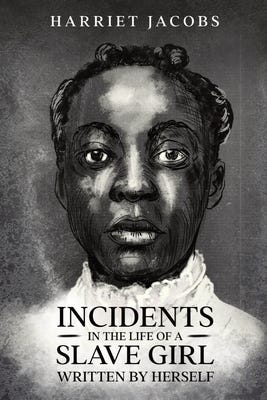
Cover of Incidents in the Life of a Slave Girl, Written by Herself, Accessed via: Marcus Books
The testimonies of formerly enslaved people who had successfully run North added theneeded dimension of the voices of those who had experienced it firsthand, grounding abolitionism in the very real and present horrors of the institution of slavery. Harriet Jacobs testified to the sexual vulnerability of Black women and girls at the hands of their enslavers, but also the love shared between she and her grandmother; Frederick Douglass highlighted the brutality of whippings and other abuses commited by enslavers, while also highlighting the undeterred persistence of enslaved mothers to reunite with the children enslavers stole away; Solomon Northrup, a free Black man from the North, captured by slave catchers, illuminated that the constant danger even free Blacks lived in thanks to the far-reaching hands of the Fugitive Slave Law. These and tens of others served as “windows into the nature of slavery itself,” pushing it into the public eye of the North, refusing to allow anyone to feign ignorance of the horrors of slavery.
…Douglass repeatedly shifts the lens to the violence of white supremacy, forcing the reader to question their passivity.
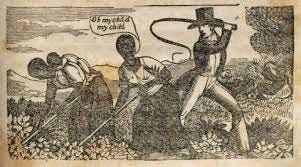
Henry Bibb’s 1849 Narrative of the Life and Adventures of Henry Bibb, An American Slave, Written by Himself. Accessed via: NCpedia
Therefore, these narratives became central to the abolitionist movement, as evidence of their claims. Although they were written for a mostly white audience, we must examine what they were: Black testimony. Historian David Blight argues that formerly enslaved people wrote “their personal stories first because they were under such pressure to demonstrate their own humanity in a sea of racial prejudice,” and to “prove that they could be reliable truth-tellers of their own experience…to declare their own literary, psychological, and spiritual independence.” I believe that Blight conflates the effect of the slave narratives upon white Americans with the motivations of the enslaved who penned these narratives. At best, arguing that the enslaved wrote to demonstrate their humanity is simply a white-centered way to interpret these sources. At worst, it suggests that the enslaved somewhat took on the claims of their inferiority made by white supremacy. To argue that they wrote to “prove” their humanity or abilities is to understand the effect and motivations as one in the same.
The formerly enslaved wrote for freedom. They wrote because, as those who had reached freedom, they desired to join the cause they hoped would free their loved ones and kin. They wrote to testify against it and to speak up in a world determined to silence them. This is not to say they did not write with white audiences in mind, but rather to say their motivations were not proofs of themselves, but to provide unignorable evidence for the immorality of slavery. In his first autobiography, Frederick Douglass wrote:
So profoundly ignorant of the nature of slavery are many persons, that they are stubbornly incredulous whenever they read or listen to any recital of the cruelties which are daily inflicted on its victims. They do not deny that the slaves are held as property, but that terrible fact seems to convey to their minds no idea of injustice, exposure to outrage, or savage barbarity.
It seems more accurate to argue from this that Douglass, in particular, wrote to place the inhumanity of white enslavers and white Northern bystanders under intense scrutiny. More than answering questions of his own humanity, Douglass repeatedly shifts the lens to the violence of white supremacy, forcing the reader to question their passivity. Indeed, this is a literary device employed by many slave narratives, designed to needle the readers’ conscience, but understanding them this way centers Black humanity and reads them as Black testimonies, rather than as efforts to prove themselves to white audiences.
While abolitionism did not directly affect the downfall of the institution of slavery, its efforts, especially including slave narratives, brought America’s accepted sin into question. Slave narratives dismantled the hold on the narrative by challenging the pro-slavery propaganda peddled by the South.
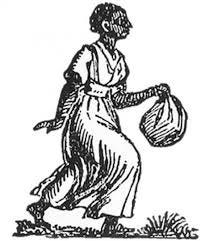
FUGITIVE SLAVE. /n19th century typefounder’s cut used in advertisements for fugitive slaves, Accessed via: Alamy
But these narratives have also served as foundational texts in the construction of Black history. White historians like Ulrich B. Phillips and authors like Margaret Mitchell (Gone With the Wind) sought to use their whiteness and writing to rewrite the history of slavery, casting the antebellum South as an idyllic landscape of racial order and happily subservient enslaved people. But the slave narratives stood as testimonies that could not be written over. These authors have stood, through their narratives, across time, as witnesses to the truth of American Slavery and the vivacity of Black people and culture. And, in the era of further erasure attempts, their writings continue to ensure the story can never truly be rewritten.
The Black Press
We must take a moment to highlight the Black Press. As a historian of Black American history, the Black Press has been central to my own research, and the preservation of stories that white newspapers and history books still attempt to whitewash or ignore. Even worse, newspapers functioned as active tools of white supremacy, printing pieces that denigrated and dehumanized Black people, consistently casting aspersions regarding the morality and capabilities of the whole race. If we only had these newspapers, much of Black life, culture, intellectual history, and discourse would be completely invisible in the historical record.
The Black press began with the Freedom’s Journal, the first Black newspaper in America. The Journal was a four-column weekly newspaper that first launched in March 1827 in New York City. Tired of the racist commentaries shared in mainstream media, Samuel E. Cornish (a free Black man from Delaware) and John B. Russwurm (Jamaican-born, Canadian-educated, free Black man) launched Freedom’s Journal as a counter and a place for all things current events in the African American community. Established in the same year as slavery’s end in New York, the journal had practical goals, including improving conditions for the newly freedpeople of the North, which, at the time, included over 300,000 people. Further, the journal also discussed abolitionist hot topics like colonization (the proposal that emancipated enslaved people should be ‘returned’ to Africa), political rights, condemned racial violence, and reported on international news stories.
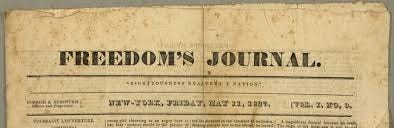
Front Page of Freedom’s Journal. Accessed via: Past Is Present
In their first issue, Russwurm and Cornish, the first editors, declared:
We wish to plead our own cause. Too long have others spoken for us.
This quote defines the core project of the Black Press from then til present day, serving as a crucial site of argumentation against white supremacy and providing a space where Black people could read and contribute an independent voice on Black American life. Black newspapers throughout the 19th and 20th centuries exposed the consistent and persistent injustices plaguing Black communities across the nation, reporting on lynchings when white newspapers would not, reporting on civil rights activism and communal efforts for social uplift. But even more, the Black Press gives us insight into the vibrant Black communities that existed, especially in the free North throughout the antebellum era, as they also reported on local events. They printed lists of births, deaths, weddings, and other moments of note in the Black community. Black newspapers illuminated the three-dimensional lives of the community, not only their pursuits of justice.
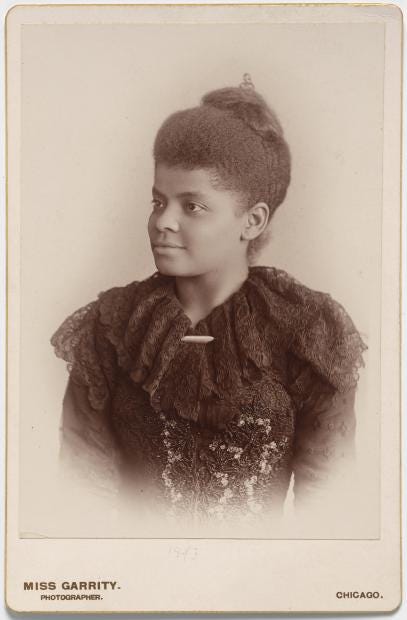
Portrait of Ida B. Wells in 1893 by Sallie E. Garrity. Image courtesy of the National Portrait Gallery, Smithsonian Institution
These periodicals have shaped Black history, granting historians access to the experiences, opinions, and ideological waves within the Black community that would otherwise be lost to time.
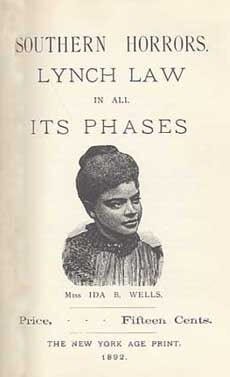
In the late 19th century, journalists like Ida B. Wells insisted that the Black press must report on the lynchings taking places across the South in the wake of Reconstruction. In her 1892 pamphlet, Southern Horrors: Lynch Law in All Its Phases, Wells declared:
The press contains unreliable and doctored reports of lynchings, and one of the most necessary things for the race to do is to get these facts before the public. The people must know before they can act and there is no educator to compare with the press… The Afro-American papers are the only ones which will print the truth, and they lack means to employ agents and detectives to get at the facts. The race must rally a mighty host to the support of their journals, and thus enable them to do much in the way of investigation.
Indeed, the Black press held the burden of responsibility to preserve the truth of Black life in post-Civil War America. As Wells implied, the distortions began at the scene of the lynchings, where police departments actively refused to construct thorough investigations, even allying with the perpetrators in the act in some cases, or simply offering them protection in others. Bishop Henry McNeal Turner of the A.M.E Church mocked the phrase many white newspapers employed, “at the hands of persons unknown,” saying:
Strange… that the men who constituted these [mobs] can never be identidyied by… governors or the law officers, but the newspapers know all about them – can advance what they are going to do, how and when it was done, how the rope broke, how many balls entered the Negros body, how loud he prayed, how piteously he begged, what he said, how long he was left hanging, how many composed the mob, the numbers that were masked, whether they were prominent citizens or not, how the fire was built… how the Negro was tied, how he was thrown into the fire – the whole transaction; but still the fiendish work was done by a set of “un known men.”
This intentional obfuscation was a major tool of white supremacy that worked to ensure the violence and terror inflicted on Black Americans could be a part of white Southern culture without ever becoming part of the official record. Thus, the Black Press carried the heavy weight of truth-keeping and telling, and the Black communities in which they were located carried the weight of providing financial support, so that their publishing could be sustained. Historian Eurie Duhn argues that this “dialogic” relationship between Black newspapers and their readers, where the newspapers influenced their readers, who in turn influenced the press, was a “central trait of African American periodicals of the Jim Crow era.”
Preserving these stories was far from easy. In 1889, Wells, living in Memphis, Tennessee, lost her teaching job after reporting on the poor conditions of Memphis public schools. Things got worse after she fixed her focus on the lynching of her friend Thomas Moss, alongside his fellow grocery store owners Calvin McDowell and Henry Steward. The men were lynched by a white mob enraged by the success of their store, which threatened the economic monopoly the white grocer had on the area. After Wells conducted a thorough investigation in Free Speech, a white mob attacked the offices of the newspaper and burned it to the ground. This forced Wells out of Memphis to Chicago, Illinois, but did not stop her determination to continue her anti-lynching campaign.
Through the persistence of the Black Press from 1827 to the present day, we have robust documentation, eye-witness reports of Black history. It is undeniable that these newspapers affected change and transformed the status of Black Americans- they testified to, and served as a site of Black community, and ensured that the realities of white supremacist violence could never be denied. These periodicals have shaped Black history, granting historians access to the experiences, opinions, and ideological waves within the Black community that would otherwise be lost to time.
Black Storytelling, Black History
Exploring how Black Americans have preserved history across time reminds me of an accusation I received during my first year of grad school about my first-year project. I had written an examination of Union-occupied Nashville that highlighted the violence faced by “contraband,” runaway slaves, who sought refuge and freedom behind Union lines. I argued that the enslaved forced the hand of the Union to house them, and that enslaved women faced particular vulnerabilities as they were not perceived as “useful” by Union officials. After handing in my first draft, I met with the faculty member running the first-year seminar for the first round of feedback, and she said, “There’s nothing here, this is not real history, it’s just storytelling.”
At its heart, the art of Black history is testifying to what has long been denied.
I was shattered. I had relished the honor of bringing the experiences of the enslaved during the Civil War to the foreground, when so few historians had discussed them, especially Black women. I had been so excited, and her reduction of my work from “real history” to “storytelling” left me confused and feeling far from capable. I went to my advisor, a Black professor who had been in the field for over 40 years, and shared what the other professor had said. I will never forget the response I got: “Don’t be surprised if you hear that for the rest of your career. Welcome to being Black, AND doing Black history in the academy! I have letters from editors saying the same thing, and memories of peers saying it, too. It’s their bias, you’re going to have to learn how to deal with it.”
Honestly, I don’t think I ever did.
But I bring this up to say, the academic dismissal of much of Black history as “storytelling” turns the very heart of Black history into a pejorative. At its heart, the art of Black history is testifying to what has long been denied. To present readers and the nation with the full picture of Black American life, so that we can conduct a robust analysis. But, even then, the nature of Black history – its being preserved by oral tradition and fewer written sources – leads us to different questions, methodologies, and analytical frameworks, causing an interdisciplinary approach that many pure historians disapprove of.
We see this interdisciplinary approach as early as the work of W.E.B DuBois. The first Black American to graduate with a PhD from Harvard, in history, DuBois lamented the limitations of history’s methodologies and began to employ those used by sociologists, too. He believed, and proved, that the two disciplines together allowed for a more thorough investigation of Black life and culture to be done through rigorous research. DuBois’ approach has blossomed into Black Studies and African American Studies departments across the nation, which typically house historians, sociologists, literature professors, and more. In these interdisciplinary departments, it is accepted that Black history is, in part, storytelling, and that it requires a multitude of methods to examine it fully.
As we engage Black history, this month and always, may we remember its original keepers, the enslaved. And may we remember the power of Black storytelling.
Sources
Blight, David. “The Slave Narratives: A Genre and a Source.” History Now, Issue 2 (Winter, 2004). Accessed via: Gilder Lehrman.
Cone, James. The Cross and the Lynching Tree. New York: Orbis Press. 2011.
“Editors- Samuel E. Cornish and John B. Russwum.” in PBS, Newspapers: Freedom’s Journal. Accessed via: PBS
Dahn, Eurie. Jim Crow Networks: African American Periodical Cultures. Boston: University of Massachusetts Press, 2021.
Norwood, Arlisha. “Ida B. Wells-Barnett (1862-1931.” In National Women’s History Museum. Accessed via: Women’s History
Wells, Ida B. Southern Horrors: Lynch Law in All Its Phases. New York: New York Age Print. 1892. Accessed via: The Project Gutenberg