


At the end of January, my parents came to the US to visit. During their stay, we made a trip to Philadelphia to visit family, and while we were there, we took them to visit Old Town. In particular, I wanted to take them to Independence Mall to show them two of my favourite exhibits in the city: the Liberty Bell exhibit and the exhibit at George Washington’s Presidential home about the enslaved people who lived there. I wanted to take them because, to me, these were well-executed exhibits. They told the truth about American history, leaving visitors with a sense of the collective efforts of generations of marginalised people to make American ideals of freedom and liberty a reality. They honored and amplified those who have historically been silenced, leaving me (a Black woman and an immigrant) feeling sober yet hopeful about all that we can do when we collaborate.
Only days after our visit, I watched footage on social media of the exhibit being dismantled.
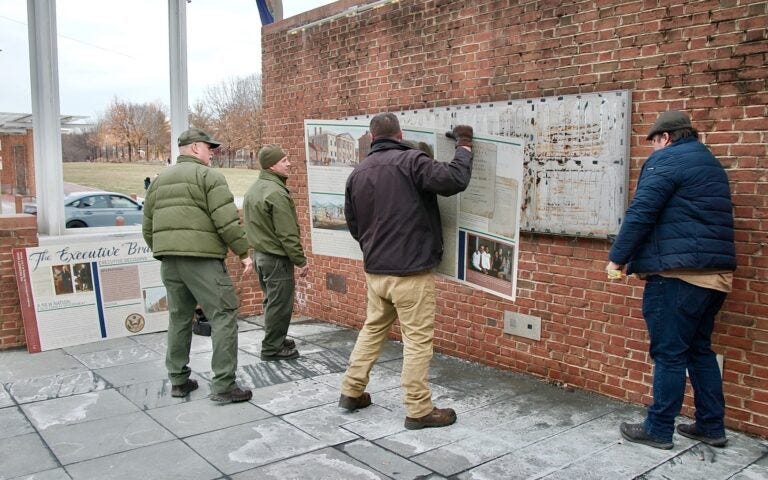
Workers remove signs from the President's House exhibit on Independence Mall. Accessed via: Emma Lee/WHYY
Then, on February 19th 2026, the exhibit panels were restored, as a result of the city’s fierce resistance to attempts by the Federal government to erase history. While the case is still being litigated in court and we don’t yet know the outcome, this incident epitomises the continued battle over Black history in the public square and the story arc of American history.
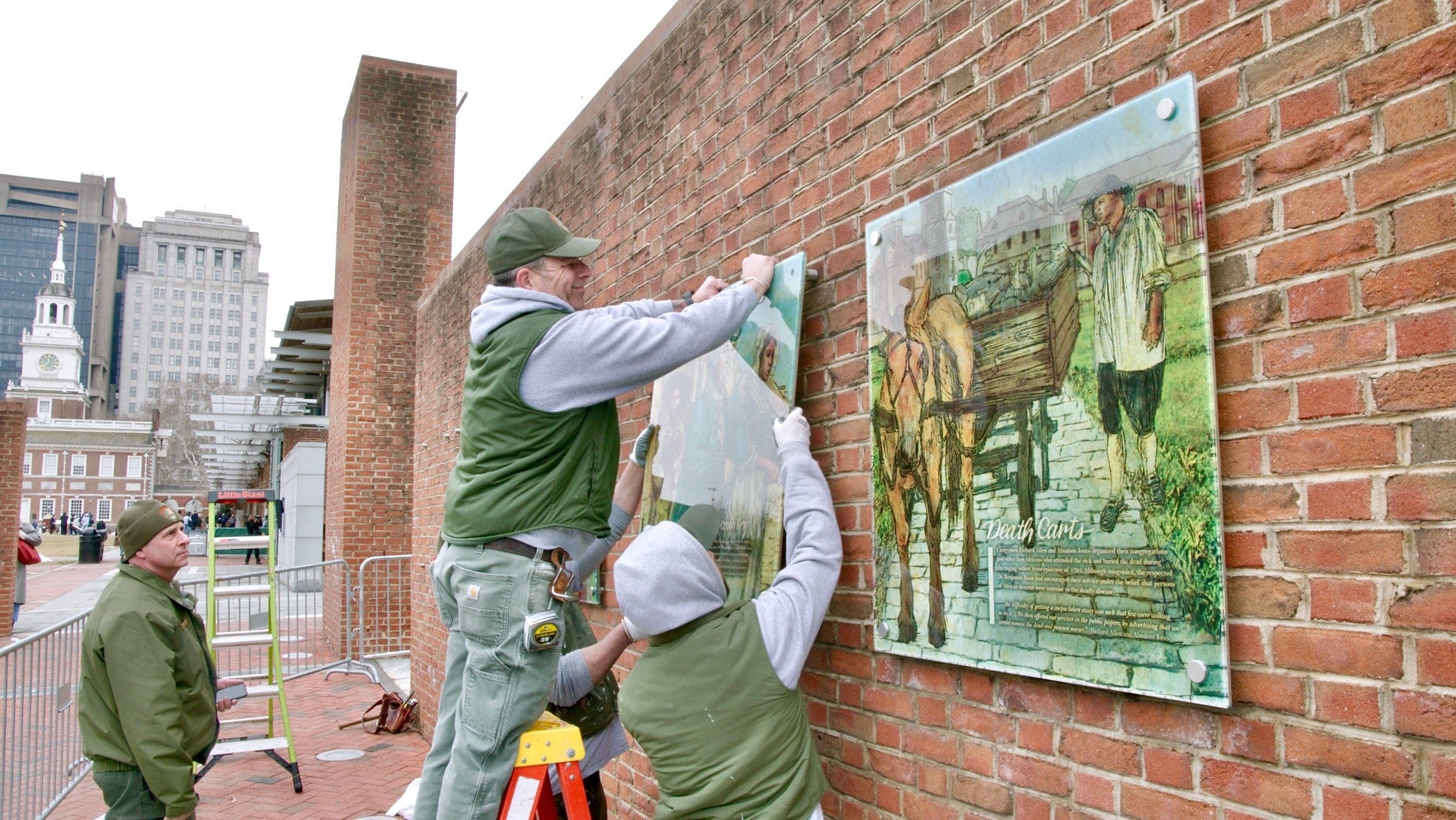
National Park Service Workers restore the exhibit at the President’s House set at Independence Mall. Accessed via: Emma Lee/WHYY
For the 100th anniversary, ASALAH invited us to “explore the impact and meaning of Black history and life commemorations in transforming the status of Black peoples in the modern world,” and I hope that this month I have demonstrated how Black history has done exactly that in different eras and through different mediums. But as we come to the end of Black History Month, I want to wrap up with a simple reminder for this moment: Black History cannot be erased, and Black History is still being made. This might feel contradictory in light of the story I just shared, but I assure you, it isn’t.
Black History Cannot Be Erased
The story of Independence Mall is one of many. In the past year, over 400 Black books have been banned, efforts have been made to redefine inclusion as exclusion, history books are rewriting the history of enslavement, and any mechanisms to right systemic wrongs are being actively dismantled. Indeed, rampant efforts are being made to erase Black History and Black presence in industries across the nation. And frankly, it is scary and deeply disheartening.
But it will fail.
I will fail because these attempts have always failed.
They have always failed because Black Americans, and their allies, have never given their stories over to the hands of the State or anyone else. In the immediate aftermath of the American Civil War, after the passing of the 13th Amendment, Black people across the nation marched in parades celebrating freedom and declaring the victory they had won. And over time, whether through the work of Carter G. Woodson, or the nameless Civil Rights activists of the 1950s and 60s, or the countless firsts, our forefathers and mothers have shown us how to preserve, protect, and build communities of belonging even in the most dire circumstances. The state has never been, and will never be, the keeper of Black stories; Black people and all those who care to tell the truth will be. In that sense, Black lives and history have always stood as a testimony of truth-telling in the face of lies and deception. And we will continue to tell the truth.
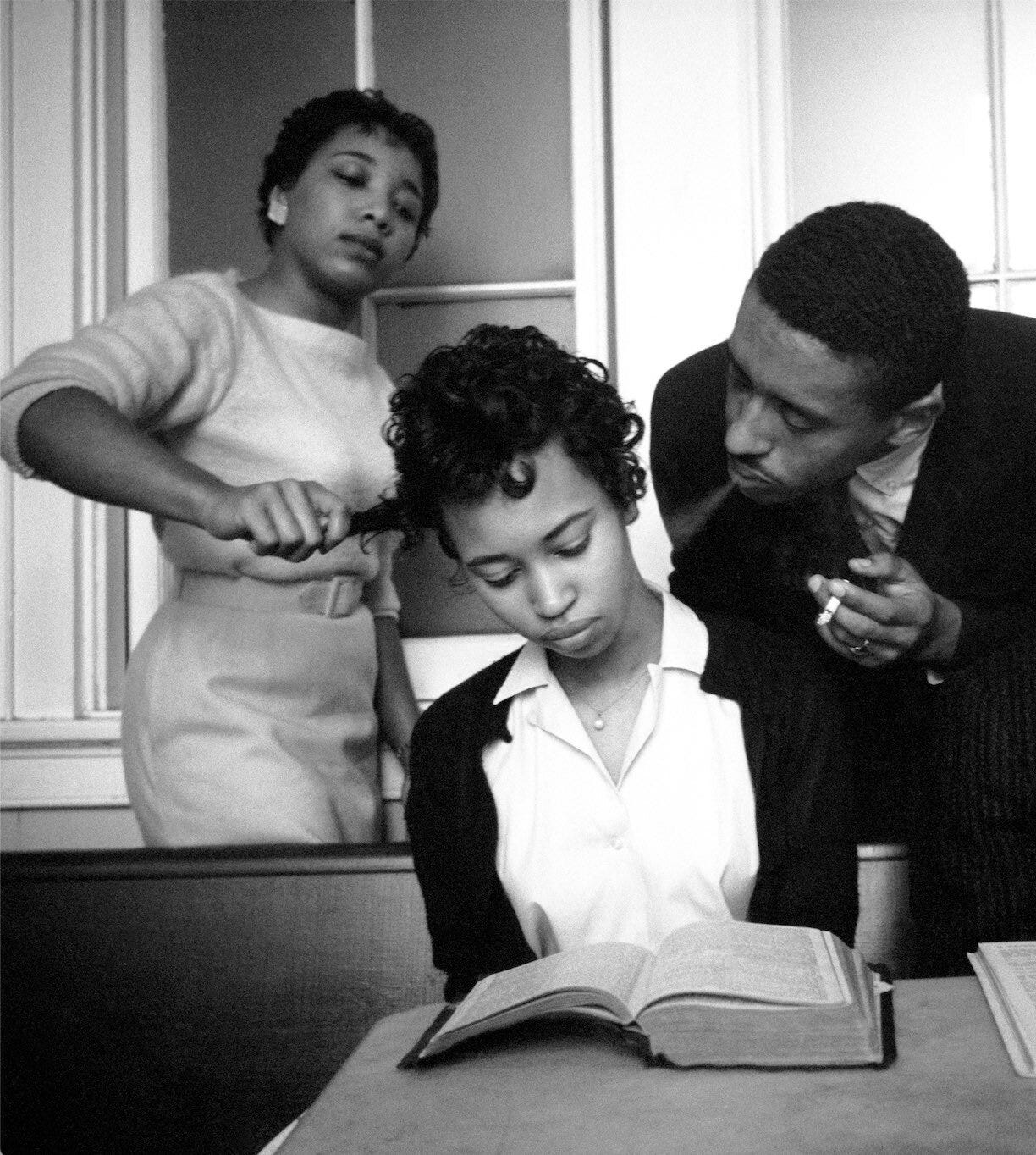
Congress of Racial Equality (CORE) members, from the Civil Rights era, practised the skills they needed to sustain the resistance, showing us that resistance is not simply reactivity, but is coordinated action. Accessed via: Eve Arnold.
So as we rightly fight for our stories to be amplified- including with legal action where necessary- we must remember the grassroots origins of Black History in America, and use it as a blueprint to ensure that Black stories are continuously told. We will continue to tell them.
And allow me to encourage you. We, here in the 21st century, have more tools on our side than any generation before. First, we are no longer dependent on school curricula alone for our understanding of history- the internet has led to the digitisation of innumerable sources documenting Black history. Second, social media has created a network and a platform for Black stories to be shared in real time. Third, Black history and other marginalised narratives are benefiting from the Striesand Effect- the more books are banned, the more people are adding them to their reading lists, even if only to find out why!
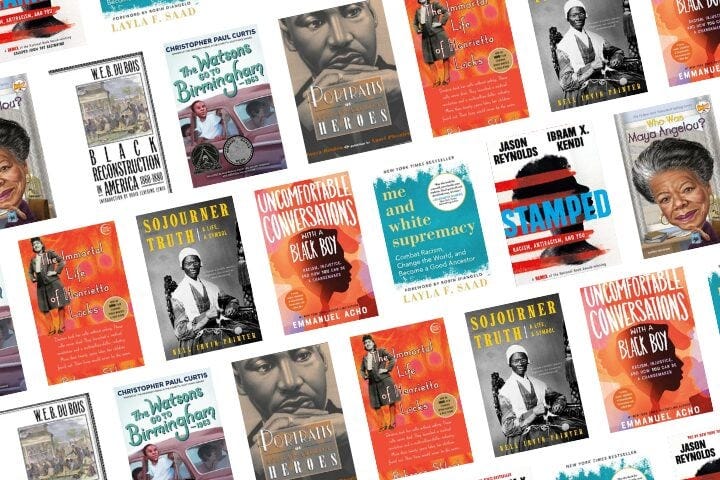
A collation of some of the over 400 banned Black books. Accessed via: PEN
Black History cannot be erased.
Of course, this is not to diminish the importance of legal and infrastructural acknowledgement, protection, preservation, and celebration of Black people's contributions to this nation. Those are of paramount importance. It is only to say that the importance of this work remains, no matter the destructive whims of macro systems, and the possibilities of making Black history known remain as long as we are willing to share it.
Black history, as it always has been, is in the hands of the people.
May we steward it well.
Black History Is Still Being Made
Black history is still being made. Not just because there is greater justice, equity, and inclusion to be achieved in this nation, but because Black people continue to excel and create regardless of the circumstances. We are still here. Our stories, no matter how big or small, are part of Black history. But even further, if you haven’t noticed, Black history is resistance. At its core, Black history is a tradition of resistance, and the resistance is far from over.
As part of a Black History Month series at my church, I had the pleasure of interviewing members of the congregation who have done much to advance justice and build Black community in this region of Pennsylvania. During the interviews with two older men who pioneered in the 1970s and 1980s, they both offered the same encouragement:
Keep going. Don’t give up. Keep building community. Keep going.
And that is the challenge I receive and offer you.
Keep going.
In this social and political moment, when our gains feel fragile and the time seems scary, may we not look around to see who else will step up and do something. May we not look back in a way that leaves us as inheritors of the blueprint, not only as grateful inheritors of the benefits. May we learn from those who have come before, seeing Black history as a pattern and a blueprint for our resistance. May we build collaborative communities of protection and uplift, so that the winds of white supremacy, though they rage, will never topple us.
A Benediction
I will close with a Black History Month benediction:
We stand on the soil of our heritage,
tilled by generations, now bearing fruit we stretch to reach.
May we not stand only with hands lifted to receive our inheritance,
but bend them again toward the earth.
Those who tilled before us watched vines burn more often than they grew.
Still, we sow.
We hope to see the vines climb high,
and we sow in gratitude and hope,
knowing that enduring growth is not dependent on our sight.